What Successful Fundraising Events Know About Volunteer Coordination
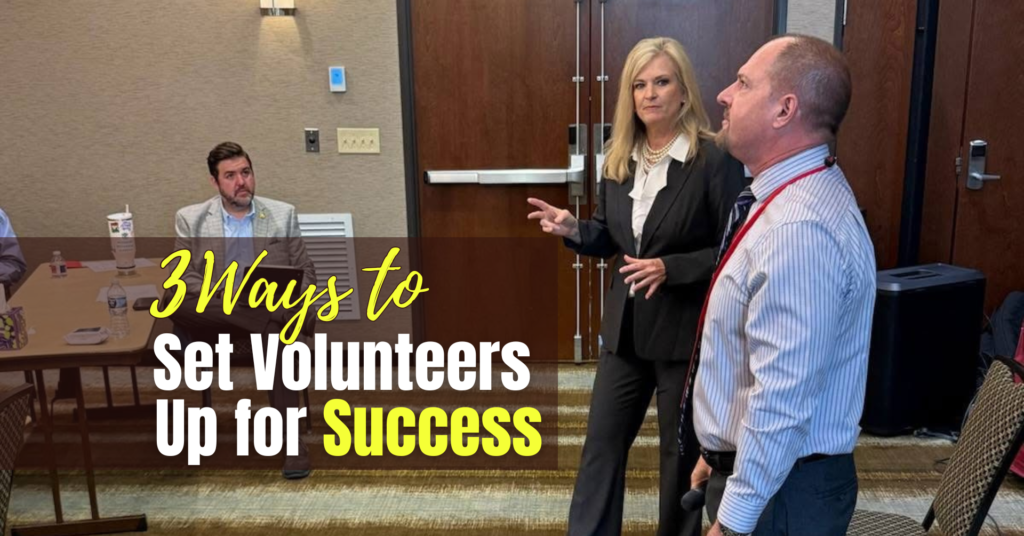
Successful gala events don’t happen simply because people are willing to help. They happen when volunteers are properly trained, clearly assigned, and set up to succeed in the right roles. In this post, Shannon shares real-world lessons from gala night experiences and practical strategies for organizing volunteers in a way that improves guest experience, strengthens operations, and helps fundraising events run more smoothly from start to finish.
We Love Our Volunteers:
Training Volunteers for Gala Night Success
A lesson I learned many years ago when doing a benefit event was how much appreciation organizations have for their volunteers. Don’t get me wrong, I love volunteers, and I know how important it is that we have them, that they are there, and that they are willing to help.
“What was the lesson?” you ask?
Well, it was incredibly painful, but definitely worth sharing.
I was doing an event for a nationally recognized children’s health organization that had a large number of very well-intentioned volunteers. However, after arriving at the event, I was tasked with giving the 20-plus young people jobs during the live auction and special appeal.
Please keep in mind that our team of professional ambassadors has multiple responsibilities, including:
- Greeting donors as they arrive (volunteers can help here, too!)
- Promoting the live auction from the live auction displays
- Generating bids (not to be confused with “spotting bids”) during the live auction
- Tracking donors during the special appeal (Fund A Need)
- Catching and recording the results of the paddle toss
- Thanking and assisting guests as they are leaving (great job for volunteers, too!)
I know you’re still wondering where the pain point is.
Volunteers Need More Than Good Intentions
So, my team is taking care of the live auction, but I position about 12 volunteers around the room and give them quick directions to raise their hands and give a bold “YES” when they see someone bid in their area. I have three or four volunteers thanking donors as I say “sold” by shaking hands, and another four volunteers writing down results as an insurance policy and backup for our clerk. I met with them prior to the start of the evening and thanked them all for volunteering and participating.
And now, the pain point: I didn’t pay any attention to them during the event.
They raised their hands, but my team was already taking care of it. But they were volunteers, and they were there to help. I didn’t take the time to appreciate them and recognize them. Shame on me. I mean that. These were good-hearted people who took time out of their lives to make a difference. They genuinely wanted to help, and I didn’t give them that chance.
And I promise you, the head of the organization saw it. She was disappointed that her volunteers were disappointed.
So, moving forward, I had a whole new game plan, and that’s what I’m sharing with you today.
Match Volunteers to the Right Roles
Rule No. 1
Make sure your volunteers are in the right role. Can I say this louder for the people in the back? This is huge!
Don’t ask someone who is shy and reserved to sell raffle tickets. Don’t ask someone who is technologically challenged to get behind the computer and do registration. Find the right role that will set your volunteers up for success.
Start by giving them a list of roles that need to be filled (for example, four roles), and then have them rate those roles 1-4 based on their desire to fill that position.
Our team can knock out raffle ticket sales the night of the event because we know how to ask. If you don’t ask, the answer is “no.” You can’t expect two quiet people to stand behind a table and wait for guests to come up and ask how they can purchase tickets.
Here’s the secret sauce for training your extrovert raffle-ticket sellers:
- Have poster-sized descriptions of the raffles with a QR code that goes directly to the purchase area.2
- Approach couples who are standing alone and may need engagement. They are desperately wanting to participate and just need the invitation.
- Approach small groups. This saves time because you can direct the ask to several couples at once.
- Ask guests whether they would like to buy one or two tickets. Don’t ask whether they would like to purchase a ticket because that gives them the option of saying no.
- By having the ability to write down their paddle number and give it to someone else to enter, you can sell a lot more tickets than asking people to go into the system and do it on their phones.
Training Registration Personnel
- Have plenty of registration people. Too few is not an option, and there is no such thing as too many.
- Have your board members arrive early so the registration volunteers can practice on them.
- Best advice ever: Don’t ask your guests if they would like to put a credit card down. Ask them, “Which credit card would you like to put on file this evening?” This keeps people from saying, “No, we’ll do it later.” Capturing credit cards is money in the bank.
- Have someone moving guests to the next open position so you can save time in line. This takes someone proactive who can watch for the open registration spot and motion for the next guest in line to move up. It’s tougher than it sounds.
Gala Volunteers Are Part of the Operations Team
Rule No. 2
Your volunteers are not guests. Set this expectation early when you’re asking for volunteers. They should not be leaving their posts to make sure they get a seat at a table for dinner.
Provide a volunteer room with plenty of food, snacks, and drinks throughout the day.
Your tables at the event have value, and please remember that. If your goal is $300,000 and you have 300 guests, the value of each seat is $1,000. Filling tables with volunteers not only takes away revenue opportunities, it also causes you to lose work positions that need to be filled during dinner, such as helping late guests who still need to register.
Side Note:
I understand this is a tough one, and we love to show our volunteers that we appreciate them. So, instead of providing a seat at the gala, host a fun event for staff and volunteers, such as a trivia night, cornhole tournament, or bowling night.
Providing dinner at the gala at approximately $70 a plate adds up quickly!
A Great Volunteer Experience Requires Clear Direction
Rule No. 3
Allow time to train. Just as all of the important components are on your timeline, make sure you’re including every module on the timeline.
Instead of “4 p.m. — Volunteers Arrive,” change it to: “4 p.m. — Registration volunteers arrive and meet in the foyer for instructions from the software representative.”
Don’t forget to include the time frame they are scheduled to stay at that station and what their responsibilities are after that window. That is a gap that I consistently see and one that needs to change.
For example, you have eight people arrive for registration training at 4 p.m., registration is from 5-7 p.m., and then the program starts. What do they do? Where do they go?
They need instructions like this:
7 p.m.: Jim and Stacy stay at registration until 8 p.m.
8 p.m.: Craig and Susan replace them until the event is over and checkout is complete.
10 p.m.: Terri and Karen join checkout for a team of four.
But what are Craig and Susan doing from 7-8 p.m.? And what are Terri and Karen doing from 7-10 p.m.?
Volunteers should have their own schedules accounting for their entire evening. That is effectively utilizing them, and they’ll appreciate staying busy. It also looks professional instead of having volunteers standing idle and not knowing what to do.
Here’s what Jim’s schedule would look like:
4 p.m. — Arrive for training; report to the foyer for instructions
5-7 p.m. — Registration
7-8 p.m. — Stay for late registration
8-9 p.m. — Package and move silent auction items to checkout
9-10 p.m. — Assist during the program with clerking
10 p.m.-event end — Back to registration tables for checkout, thanking guests, and assisting
11 p.m.-event end — Pack up supplies to go back to the office
Too often, I see registration volunteers leave the table once the program starts, and then late arrivals don’t have anyone to help them. Or after the event, there is no one at checkout to answer questions because “people are supposed to check out on their phones.”
Yes, this sounds like a lot! But guess what? Volunteer coordination IS a lot!
Training and Communication Create Better Events
Let’s give a shoutout to our friends filling these positions. We appreciate you so much!
And last but not least, if you don’t want to ask your staff or team to stay late and clean up, consider switching with another organization’s team and volunteering for their event. It’s a great way to collaborate and support organizations you want to align with.
Good luck, and happy fundraising!
There’s a lot more happening behind a successful gala than most people ever see. From volunteer coordination and guest flow to timing and fundraising strategy, the details matter. If you’d like guidance from a team that understands how to bring all those pieces together, schedule an introduction call with Everything Gala here.
written by…
Shannon Eason
CEO of Everything Gala &
International Auctioneer Champion
Shannon Eason, Founder and CEO of Everything Gala, is a dynamic and engaging force in the world of fundraising. As an International Auctioneer Champion, she’s mastered the art of captivating audiences—blending charisma, energy, and strategy to inspire generosity and help organizations crush their fundraising goals. A recognized expert in the field, Shannon has presented at workshops, seminars, and conferences from coast to coast, sharing her insights and passion for elevating fundraising events. Through Everything Gala, she partners with nonprofits, schools, and socially driven causes to turn purpose into powerful results.


Copyright © 2025 Everything Gala